Andrew Couillard, Harpoon Ventures. November 3, 2026.
It started with a favor from an alum to a student.
I met Greg Barrow while I was taking Hacking for Defense at Stanford, when I needed an interview for a project and he gave me far more of his time than I deserved. Months later my phone rang, and this time he was the one with questions, vague ones about what it takes to start a venture-backed company and the kind you only ask when you are already halfway out the door. Somewhere in that conversation he told me he was burning the boats.
Fitting, since he was about to build what goes under them.
Greg and three colleagues had spent their careers running one of the country's largest undersea autonomy portfolios at General Dynamics, with programs in service with the U.S. Navy and the Royal Australian Navy, and they had watched a gap grow from the inside that nobody was closing. A few weeks after that call the four of them were sitting across from our team with resignation letters already drafted. We wrote the check so they could send them.
Today Corridian comes out of stealth with a $38M seed round led by Point72 Ventures, with participation from Balerion Space Ventures, Harpoon Ventures, DCVC and Marlinspike, and a syndicate of additional top defense and deep-tech investors. Harpoon was the first institutional check in.
The ocean is the last place you can still hide
Moving things across an ocean used to depend on tonnage, speed and distance. Now it depends on whether anyone can see you coming. A peer adversary in the Western Pacific has spent twenty years building long-range anti-ship missiles and the sensors to aim them, and the cost exchange is ugly: Bryan Clark at Hudson puts it at about $20 million of missile against a $3 billion destroyer. When CSIS wargamed that fight 24 times, we lost dozens of ships and hundreds of aircraft in the opening weeks, and that was in the games we won.
So if that day comes, the big surface fleet gets pushed back outside the engagement zone and the only capital assets that make it into theater will be underwater (or in space). Crewed boats carry what they were engineered to carry and not a crate more, and the yards are turning them out at roughly 1.3 a year against a goal of two. Meanwhile we have disaggregated our force across the island chains on purpose: smaller units with limited communications, every one of them needing fuel, parts, batteries and the swarms of autonomous systems the services are buying by the thousands. A Marine officer wrote this summer that our lethality has matured while our logistics has atrophied. Amateurs study tactics. Professionals study logistics.
We can sense across the theater and we can reach across it. We cannot sustain across it at scale.
Logistics at scale
Corridian is a New England company building ultra-large autonomous underwater vehicles (AUVs). The idea is almost embarrassingly simple once you hear it. Most autonomous undersea systems were built to watch and listen. Corridian is designing from the cargo outward, a vehicle whose only job is to move payloads at scale across vast ocean distances, out of sight. It uses proven commercial parts and open architectures so it gets better as the technology around it improves, batteries most of all. And it adds undersea capacity alongside the fleet instead of asking crewed boats to do a job they were never meant to do.
The Navy has the plan and the budget for larger undersea vehicles, and in 2025 the Office of Naval Research asked industry for exactly this kind of vehicle. The flagship vehicle is planned to be unveiled in 2027.
The team that already built the hard part
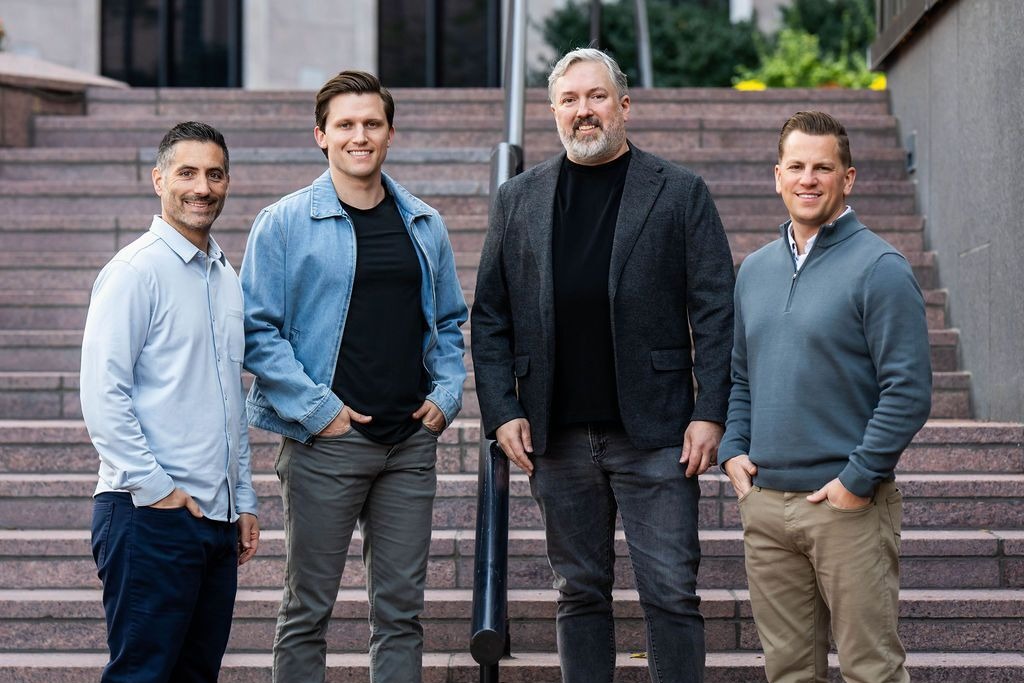
Mike Guay, Greg Barrow, Kyle Arace and Mark Bodnar are the General Dynamics Avengers. Between them they ran the product, the programs, the engineering and the engineers behind the class of vehicle the Navy fields today. Mike is an Army combat veteran who took some of the Navy's most advanced autonomous undersea programs to market. Greg was an Air Force acquisition officer and knows how the government buys because he used to be the one buying. Kyle has led the design of more than 70 undersea vehicles. Mark has led more than 100 engineers on large maritime programs. The one thing they could not do from inside a prime was build the vehicle the fleet does not have. So they left.
Black Flag
Corridian joined Black Flag, our national security accelerator, in January 2026 as a line on the cohort roster that just said "Stealth." Our team worked their problems with them (who the real customer is, how that customer buys, how to run a seed when half the market is circling), and when the round came together we made the calls. Some of those firms are now on the cap table.
In August, Greg stood up at the Black Flag showcase at Fed Supernova in Austin, in front of a room full of government buyers, operators and investors, and pitched a company he could barely describe. He stunned the room anyway with the case for why it needs to exist. Today he can finally tell them the rest.
First check
At Harpoon we want to be the first institutional check into the most audacious founders building critical technology for America and her allies. Before the prototype, before the term sheet from the big fund, sometimes before the company exists. We wrote the first check so they could leave. We joined the seed so they could build. We will be there for what comes next.
Corridian's work helps the U.S. and its allies maintain and extend credible deterrence, and we are honored to back them as they come out of stealth. If you are an engineer who wants to build at a scale almost nobody attempts, they are hiring at corridian.com.
It started with a favor. Glad it didn't end there.